
This is part 2 of 3 in Evidence Underfoot: A Floor-Level Guide to Move-In and Move-Out Condition.
Part 1 of this series showed you how to photograph floors on move-in day. Those photos only help if you can read what changed by move-out. That is what this part is for.
This series was shaped by the flooring know-how of Brandi Carpet, whose team sees worn, scratched and stained floors every week and helped us sort out what is normal and what is not.
If you skipped the first part, go back to the steps for taking move-in floor photos. Every call below compares the floor today to the floor back then.
Owners can usually charge for damage but not for normal wear and tear, and both leave marks. A floor that has hosted a family for three years will never look new. So don't ask whether there are marks. Ask whether they fit ordinary living.
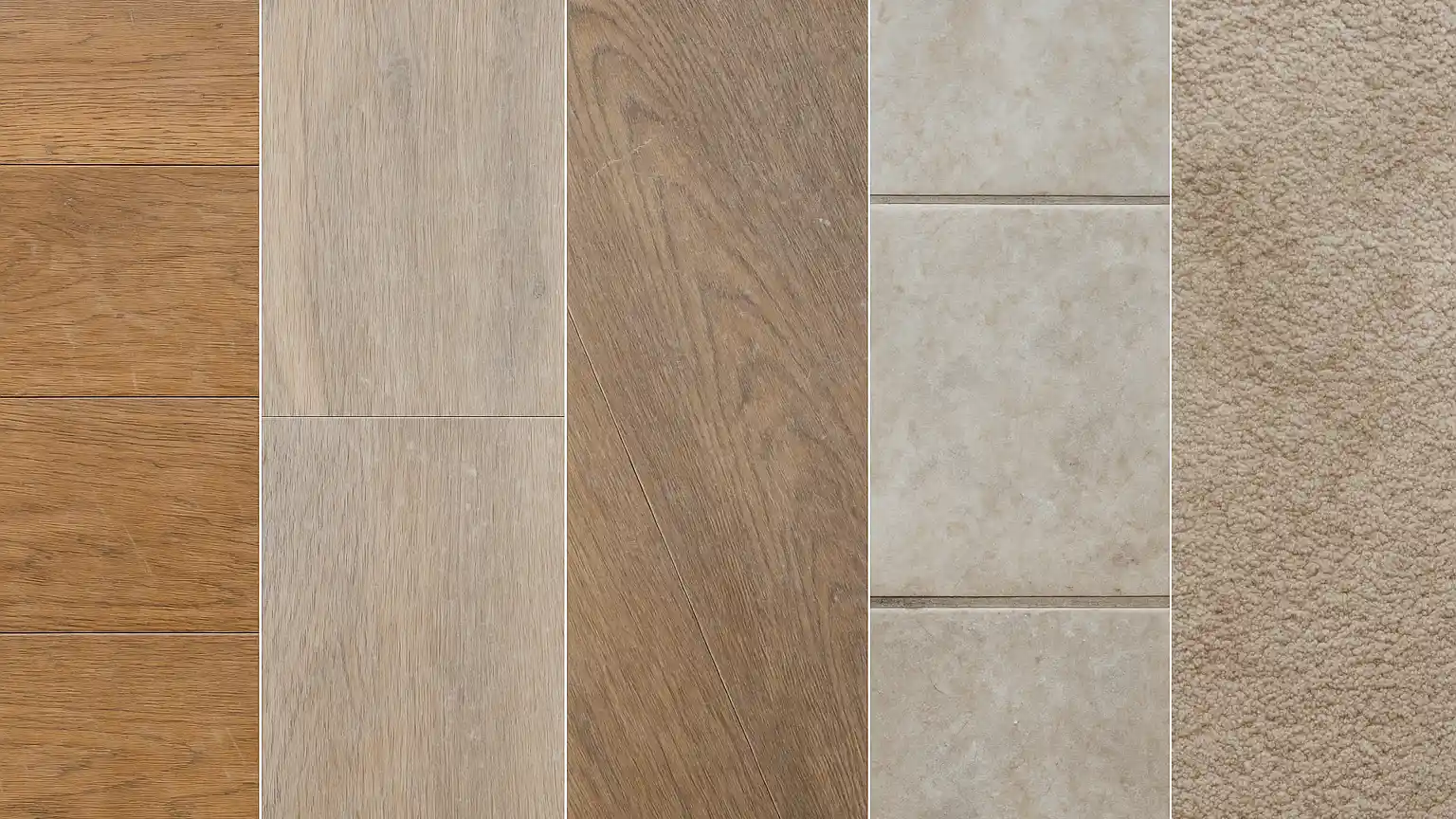
Normal Wear by Floor Type
- Hardwood: Soft dulling in walkways, fine surface scratches you can't feel and slight color change near sunny windows.
- Laminate: Light haze in traffic lanes and a few small surface scuffs. The wear layer is tough, so heavy marks are not typical.
- LVP: Faint scuffs, slight sheen loss and small dents under chair legs that often relax over time.
- Tile: Grout that has darkened a shade and a duller glaze near doors. The tile itself should be whole.
- Carpet: Flattened traffic paths, slight fading and mild matting by the couch. Three years is a big slice of a rental carpet's life.
Where Wear Ends and Damage Begins
Damage is usually deeper, more focused or tied to one event: a split board, a cracked tile, a burn, a pet stain that soaked into the pad, or a laminate seam swollen from standing water. If you can point to a single cause and a single spot, you are likely looking at damage.
Scratches tell a story if you know the clues. Three causes show up again and again: pet claws, furniture drag and grit. Each leaves its own pattern.
Pet Claws
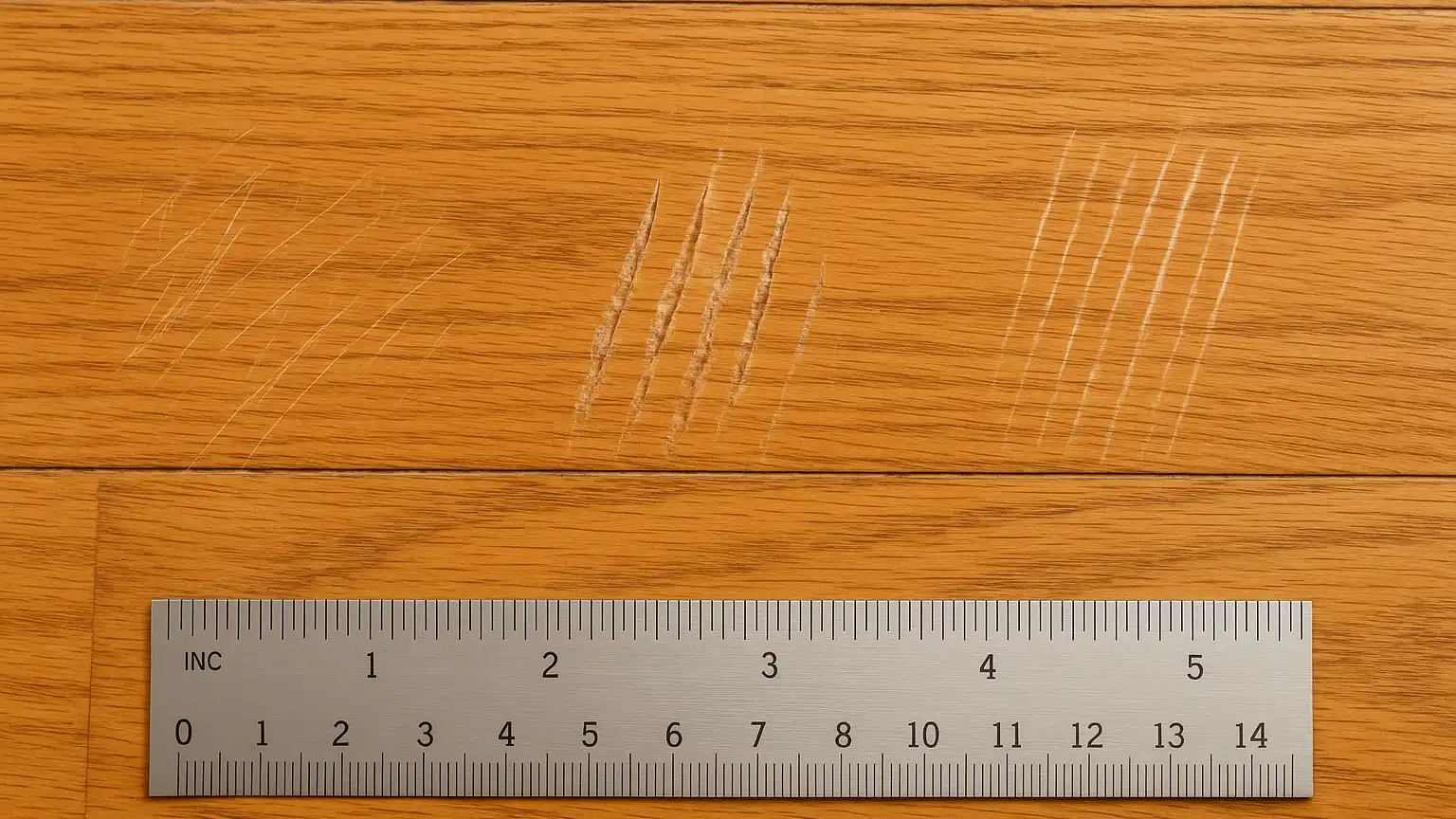
Claw marks are short, slightly curved and tend to appear in groups of three or four, side by side. You will find them where pets run, turn or wait: by the back door, near food bowls and at the foot of the bed. One mark looks minor. Hundreds across a hallway point to a pet the floor wasn't built to handle, and that often counts as damage.
Furniture Drag
Drag marks are long, straight and often parallel, usually ending where something heavy sat, like a dresser or bookcase. Look for a deeper gouge at one end where the weight first bit in. These often trace back to a move-in or move-out day, which ties them to a single event.
Grit Abrasion
Sand and dirt act like sandpaper under shoes, leaving a dull, hazy patch of fine scratches running every which way at entry doors and in main walkways. In most cases this is normal wear, especially in dusty climates, and it is rarely a fair charge.
Two Quick Field Tests
- The fingernail test: Run a nail across the mark. If it doesn't catch, it's likely a surface scuff. If it catches, the mark has gone into the finish or wear layer.
- The low light test: Hold a flashlight flat to the floor. Shallow wear fades out. Real gouges throw clear shadows.
Cause matters as much as the mark. A slow leak a tenant reported months ago that nobody fixed is not the tenant's fault, and knowing how fault shifts when ignored repair requests pile up can save you from a charge you can't defend.
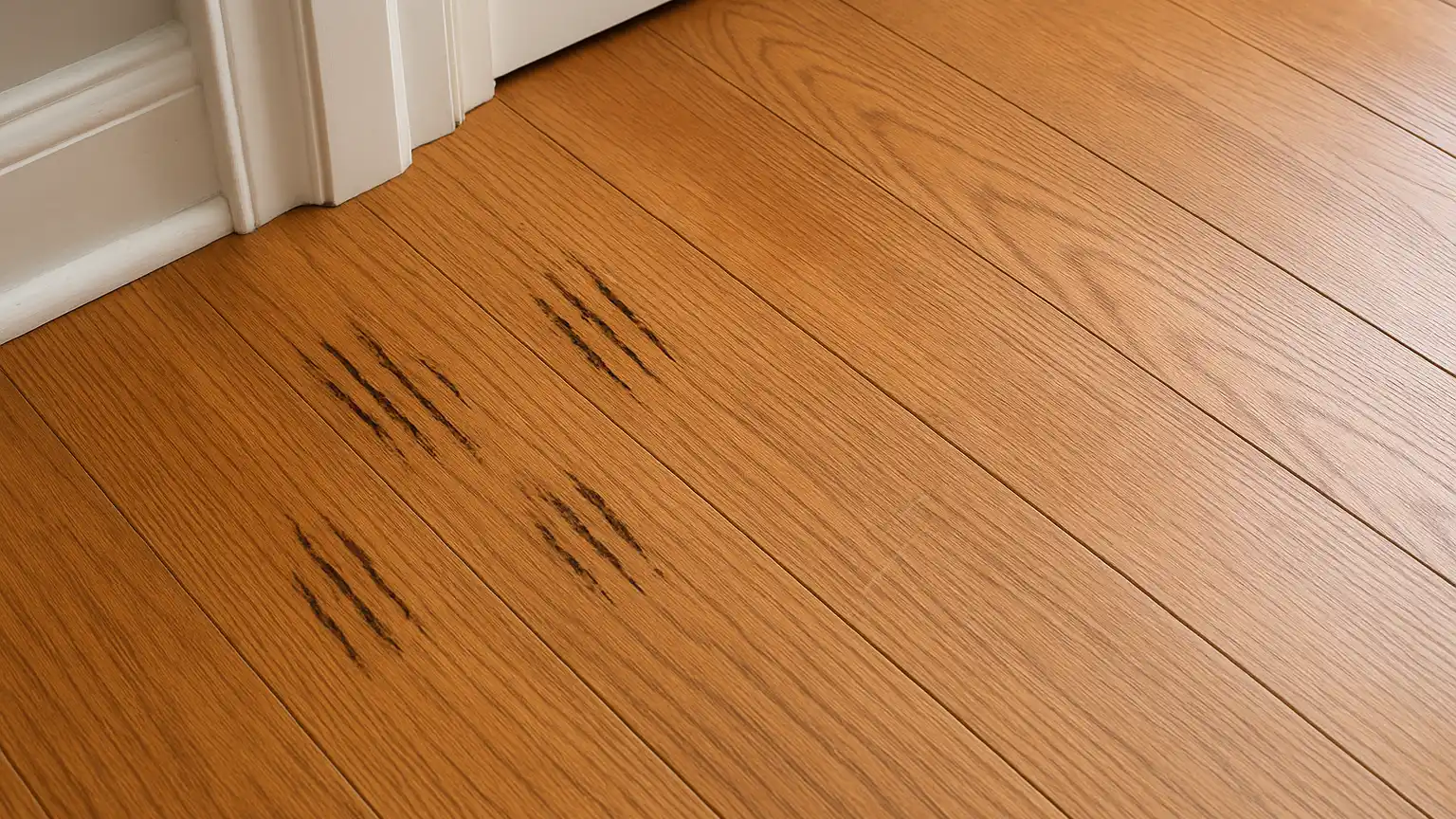
Once you know a mark is damage, the next step is pricing it fairly. This is where many deposit disputes start.
Charge for What Was Lost, Not for a New Floor
Every floor has a useful life. If a carpet was halfway through its life when a pet ruined it, the tenant should cover about the remaining half, not the full cost of new carpet. The same logic applies to refinishing a worn hardwood room. Record each floor's age and expected life so the math is simple later.
Keep the Charge Tight to the Damage
One gouged plank does not justify a whole new room. Flooring pros like the team at Brandi Carpet often point out that many damaged areas can be fixed locally. Price the repair for the spot that was harmed, and note why a larger fix was or wasn't needed.
A cracked tile from a dropped pan is damage, but darker grout is not. When a single tile needs a close color match, checking a list of trusted tile installers in Arizona can help you get a clean repair quote fast.
Back Every Charge With Proof
- A move-in photo and a move-out photo of the same spot, side by side
- A short note on the likely cause, such as claws, drag or water
- The floor's age and the prorated math
- A written repair quote or invoice
Deciding between a spot fix and a full redo is its own skill. The next part walks through how a pro weighs depth, spread and matching when you need to patch or replace floors without slowing your turnover.
The Floor Keeps an Honest Record
Three years of normal life will always leave dull walkways, faint scuffs and flattened carpet. Damage is deeper, more focused and usually tied to one cause: short curved clusters point to pets, long straight lines to furniture, and hazy swirls to grit that came in on shoes.
Read the marks with care, compare them to your move-in photos and charge only for the share of life that was lost. Your deductions become easy to explain, tenants see the logic, disputes shrink and your floors get the right fix. That fairness protects your deposit decisions and your reputation as an owner.