
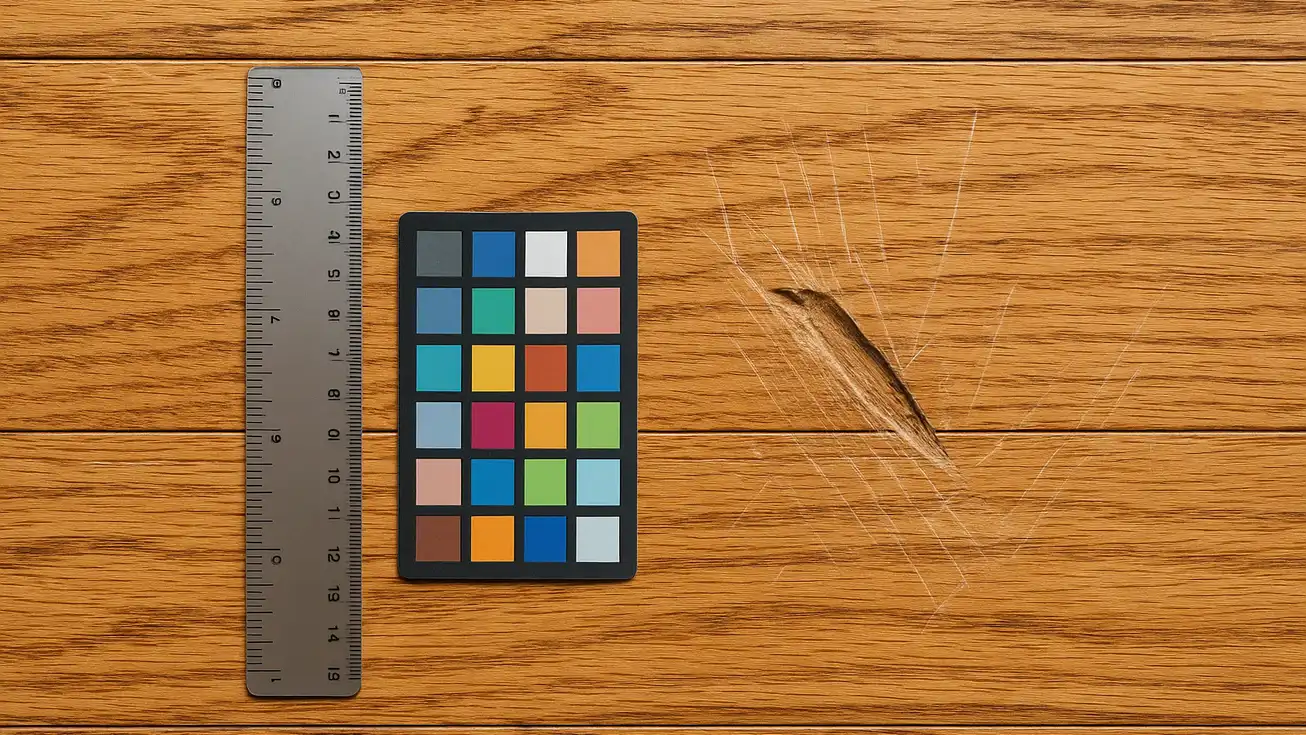
A tenant moves out after three years. You find a long gouge in the hallway. The tenant says it was there on day one. Your only proof is a bright, blurry photo taken from the doorway. Now a fair charge is hard to defend.
Key takeaways
- How to light, angle and mark move-in floor photos so they still prove something years later
- What normal wear looks like on hardwood, laminate, LVP, tile and carpet after three years
- How to tell pet claw marks, furniture drag and grit abrasion apart
- How to score damaged spots on depth, spread, subfloor risk, matching and cost
- When a patch is enough and when a full replacement is truly needed
This series is for rental owners and property managers who want floor calls they can stand behind. It follows one floor from move-in to move-out to repair. First you make a clear record. Then you read what changed. Last, you choose the right fix without wasting money or vacant days.
Much of the practical detail came from Brandi Carpet, whose flooring crews see worn, scratched and stained rental floors every week. Their hands-on view of how each floor type ages shaped the advice in each part below.
Which Floor Problem Are You Facing?
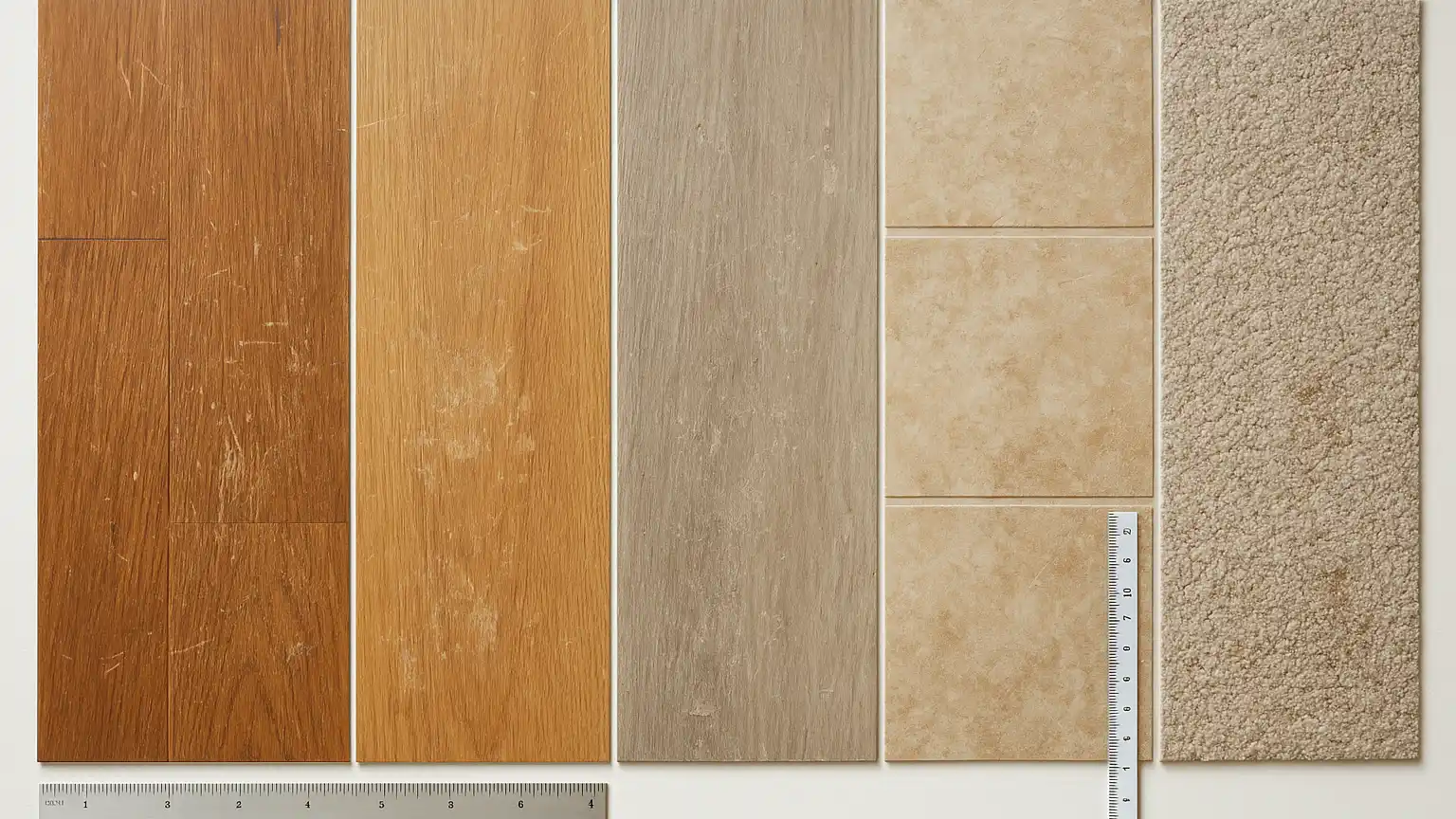
Day One Is Your Only Clean Look
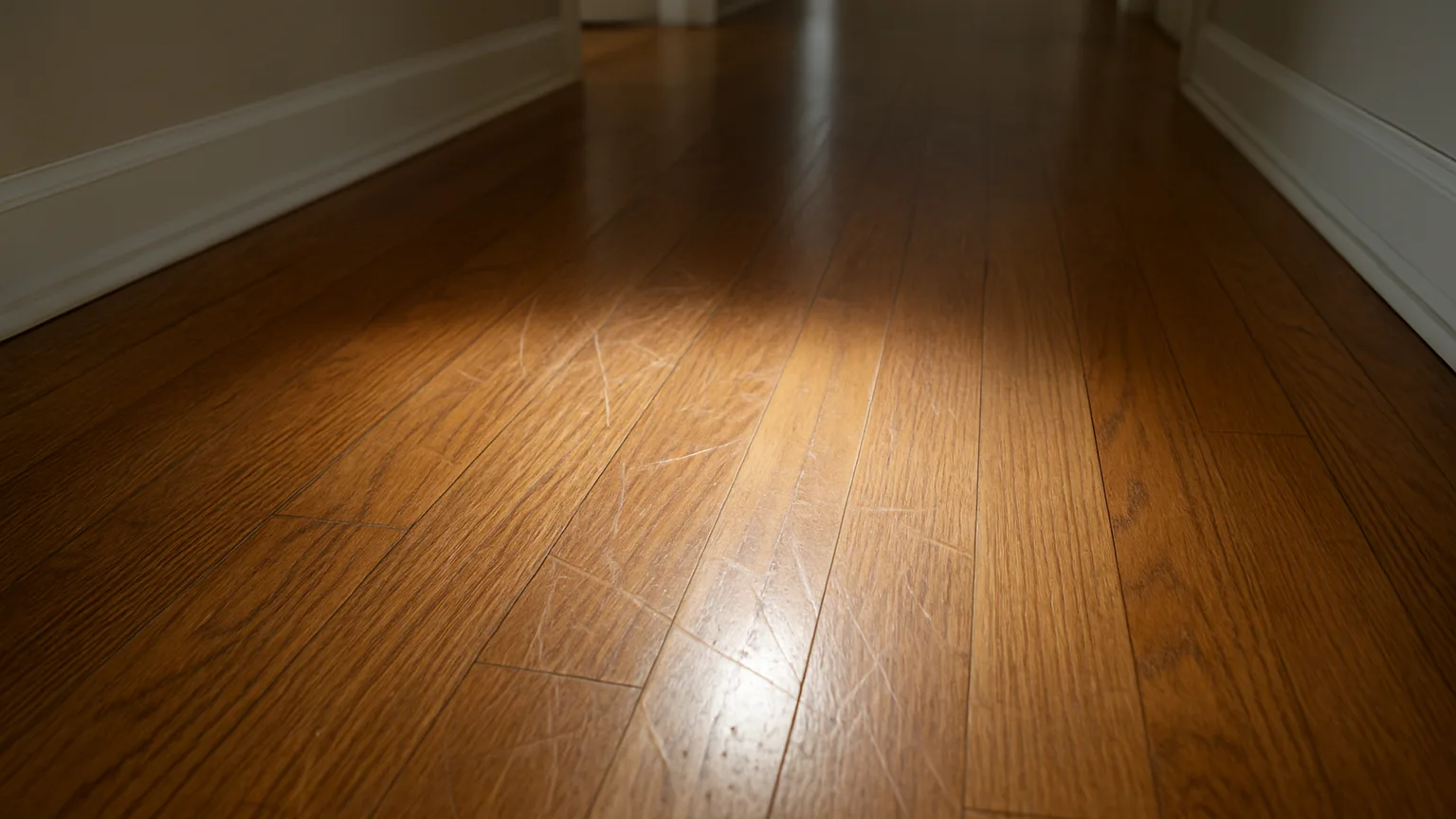
Once furniture, rugs and boxes arrive, the floor disappears for years. Most owners use that short window for quick phone shots that show a room but not the floor. Ceiling light washes out fine scratches. Wide shots hide small chips. Without a point of reference, nobody can say where a mark sits or how big it is.
The fix is simple and takes a little more time. Good move-in records tend to share a few habits:
- Low, side light that throws scratches and dents into view
- Several angles per room, not one shot from the door
- Close-ups of seams, thresholds and any existing flaws
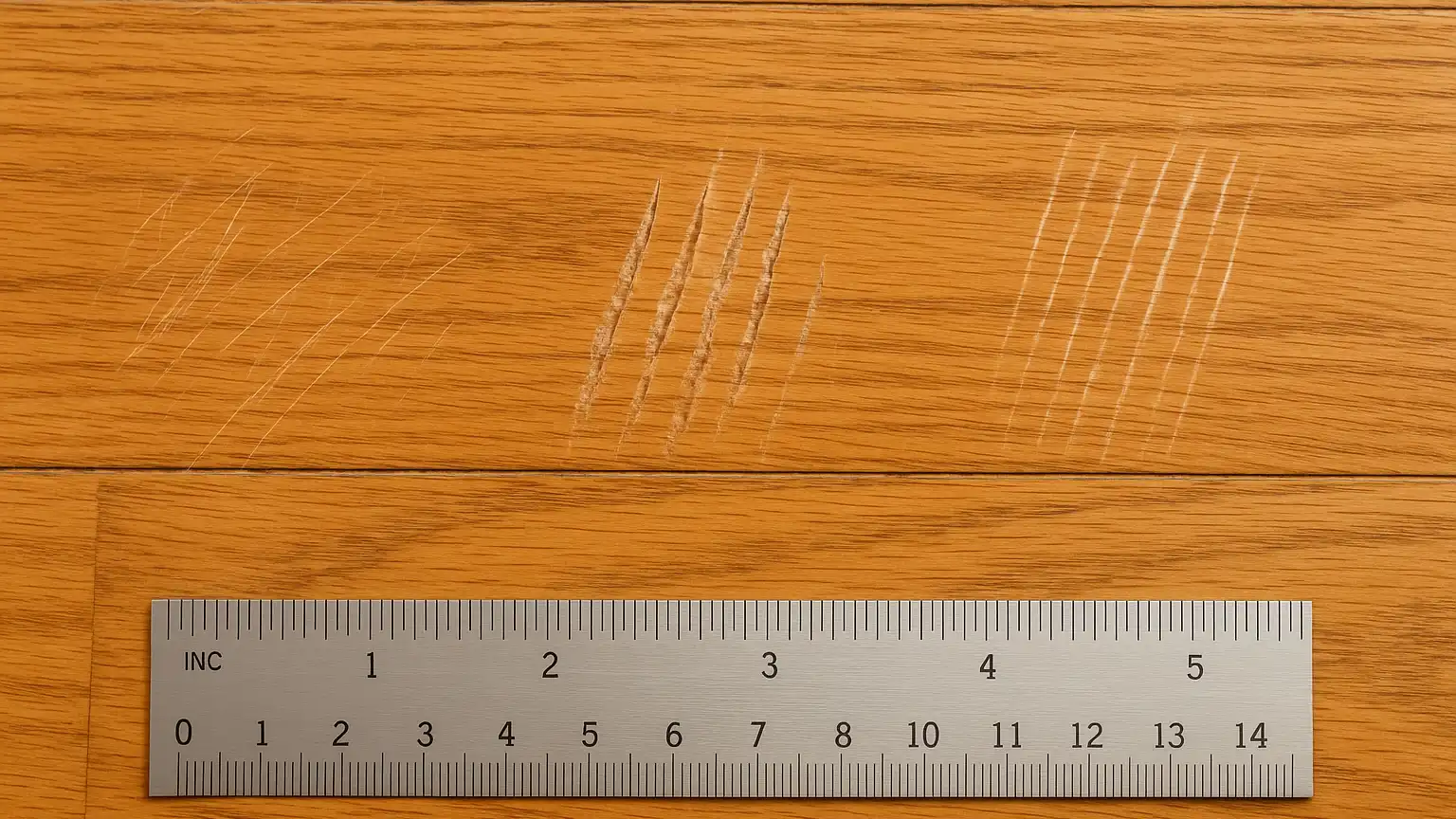
- Reference markers like a coin or tape measure for size and place
Every Floor Ages, So Judge the Kind of Mark
A floor that has hosted a family for three years will never look new. Owners can usually charge for damage, but not for normal wear and tear. Both leave marks. So the real question is not whether marks exist. It is whether they fit ordinary living.
What Normal Looks Like
Hardwood dulls a bit in walkways and picks up fine scratches you can't feel. Laminate, LVP, tile and carpet each have their own honest signs of age. Knowing them keeps you from billing a tenant for simply living in the home.
Reading the Scratch Itself
Pet claws, dragged furniture and tracked-in grit each leave a different pattern. Once you can tell them apart, your move-out charges become fair, clear and much easier to defend.

The Patch or Replace Call
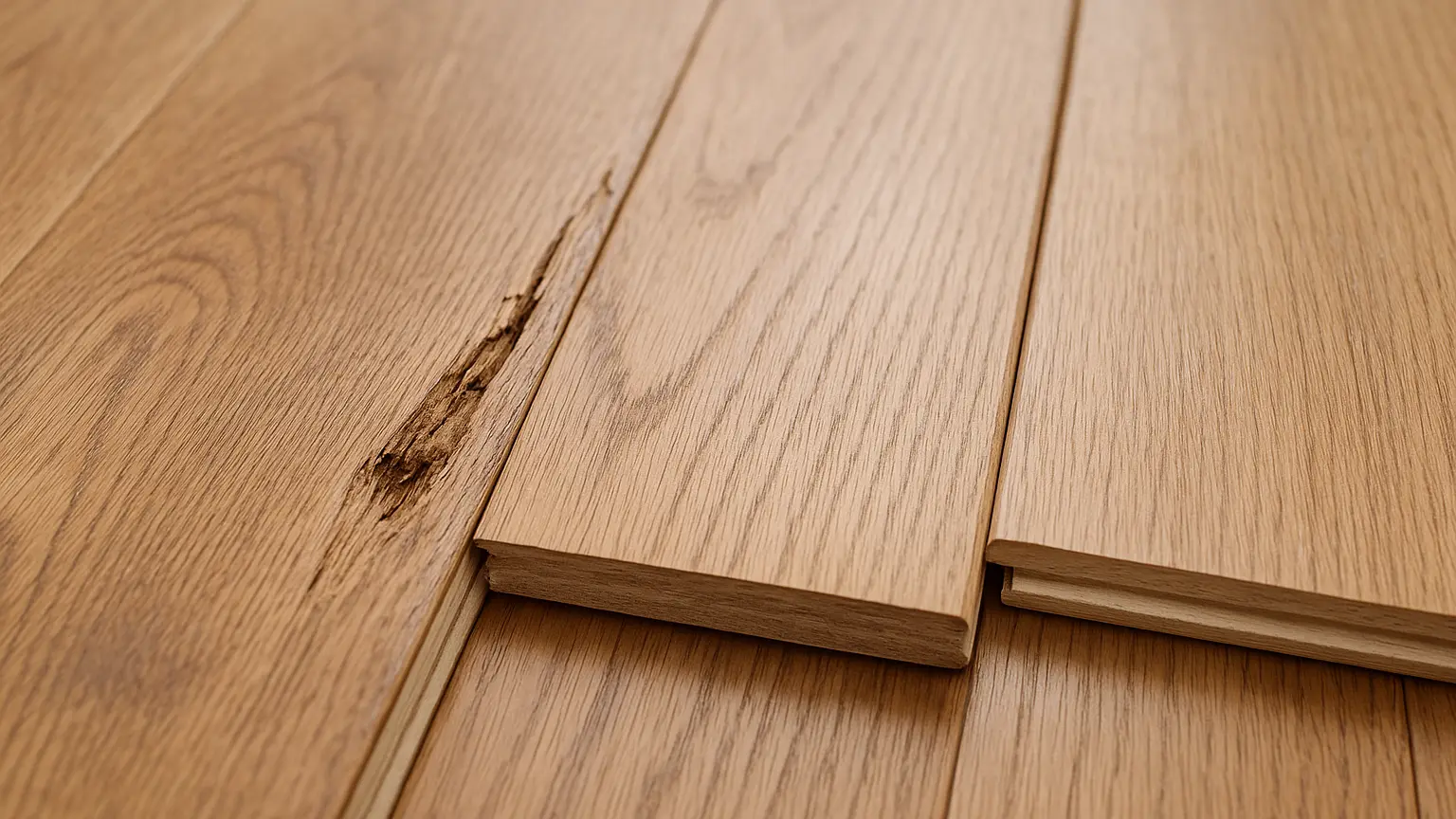
Once a mark counts as real damage, the next question comes fast. Do you patch it or tear out the room? Every day spent deciding is a day the unit earns nothing. Flooring pros make this call by scoring each damaged spot on a few clear points, then picking the smallest fix that will truly last.
Depth asks if the mark stopped at the finish or cut into the core. Spread asks if it is one spot or a whole path. Subfloor risk asks if water or rot may lurk below. Matching asks if new boards or tiles will blend in. Cost ties it all together. A full replacement is sometimes the right answer, but often it is not.
Where to Step In First
If a tenant is about to move in, start at the first part and build your record now. Each later part leans on those photos, so the series works best in order.
If a move-out is already here, jump straight to the part that fits your problem. Use the second part to judge the marks, and the third to plan the repair and get the unit back on the market.